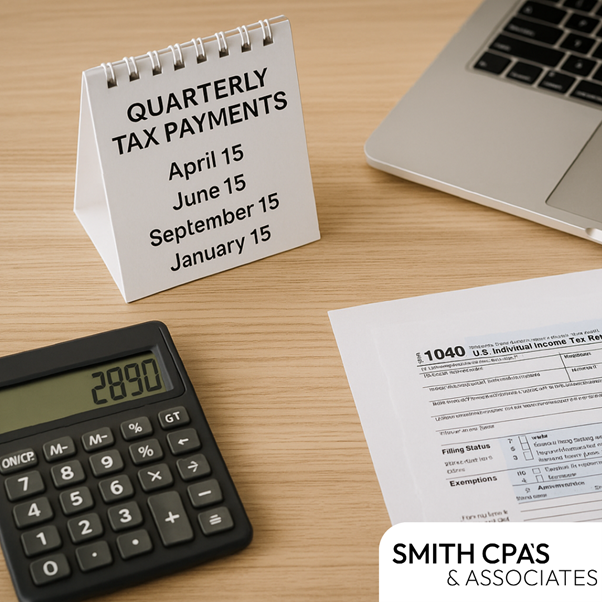
Quarterly Tax Payments: How to Stay Ahead and Avoid Penalties
Staying current on estimated taxes is about more than compliance. With the right plan, you can manage cash flow more effectively, reduce stress, and avoid
unpleasant surprises during tax season.
If you earn income without regular withholding — as a small business owner, independent contractor, or investor — quarterly payments are part of your financial responsibilities.
Here’s how to stay ahead and keep your money working for you.
1. Know If You’re Required to Pay
You may need to submit estimated tax payments when you expect to owe $1,000 or more after accounting for withholding and refundable credits.
Who this typically applies to:
- Sole proprietors, partners, and S-corp shareholders
- Freelancers or gig economy workers
- Individuals with significant investment or rental income
Pro Tip: Even if your business is incorporated, estimated taxes may still apply to your personal income.
2. Understand the Quarterly Schedule
Quarterly payments are due four times a year, but the timing isn’t divided evenly across the calendar.
Payment deadlines:
- April 15 — income earned January–March
- June 15 — income earned April–May
- September 15 — income earned June–August
- January 15 (next year) — income earned September–December
Pro Tip: Set reminders well in advance. These deadlines tend to arrive quickly.
3. Calculate Smart — Not Blind
Many business owners divide last year’s tax bill by four, but that approach can lead to overpayment or underpayment.
Better strategies include:
- Using current-year income for more accurate quarterly estimates
- Reviewing profit and loss each quarter to adjust payments
- Asking your CPA for a customized tax projection using real-time data
Pro Tip: Accurate calculations help preserve cash and prevent tax-season surprises.
4. Use the Safe Harbor Rule
The safe harbor rule helps you avoid penalties, even if your income varies significantly throughout the year.
You’re generally protected from penalties if you pay either:
- (110% if your income exceeded $150,000)
Pro Tip: This rule is especially valuable for businesses with seasonal or irregular income.
5. Automate and Review Regularly
A consistent system makes staying ahead much easier.
Steps to take:
- Automate payments or reminders through the IRS EFTPS portal
- Set aside funds monthly in a dedicated “tax savings” account
- Review your quarterly obligations with your CPA
Pro Tip: Treat quarterly payments the same way you treat payroll — consistent, organized, and non-negotiable.
Stay Proactive, Stay Penalty-Free
Quarterly taxes don’t have to be stressful. With the right planning, they become a predictable and manageable part of your financial routine.
By staying proactive, you can avoid penalties and maintain smoother cash flow throughout the year.
At Smith CPAs and Associates, we help business owners simplify tax compliance, strengthen cash management, and eliminate end-of-year surprises.
Ready to get your quarterly tax strategy in place?
Book your Free 30-Minute Discovery Call!